THE STRIP
A ribbon of photographs
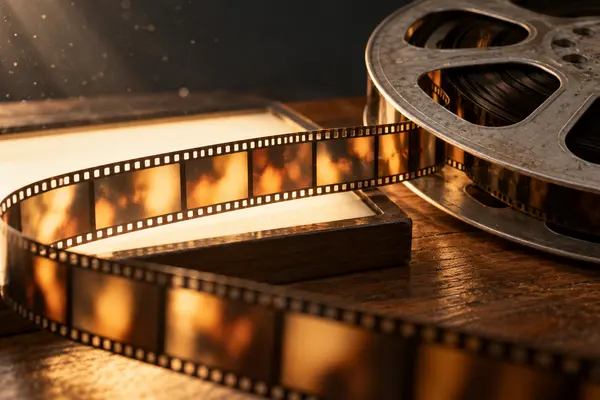
Cinema film is 35mm wide, with sprocket holes on both edges so the projector can pull it one frame at a time.
Where 35mm came from doodlefilm
00HOW CINEMA FILM WORKS
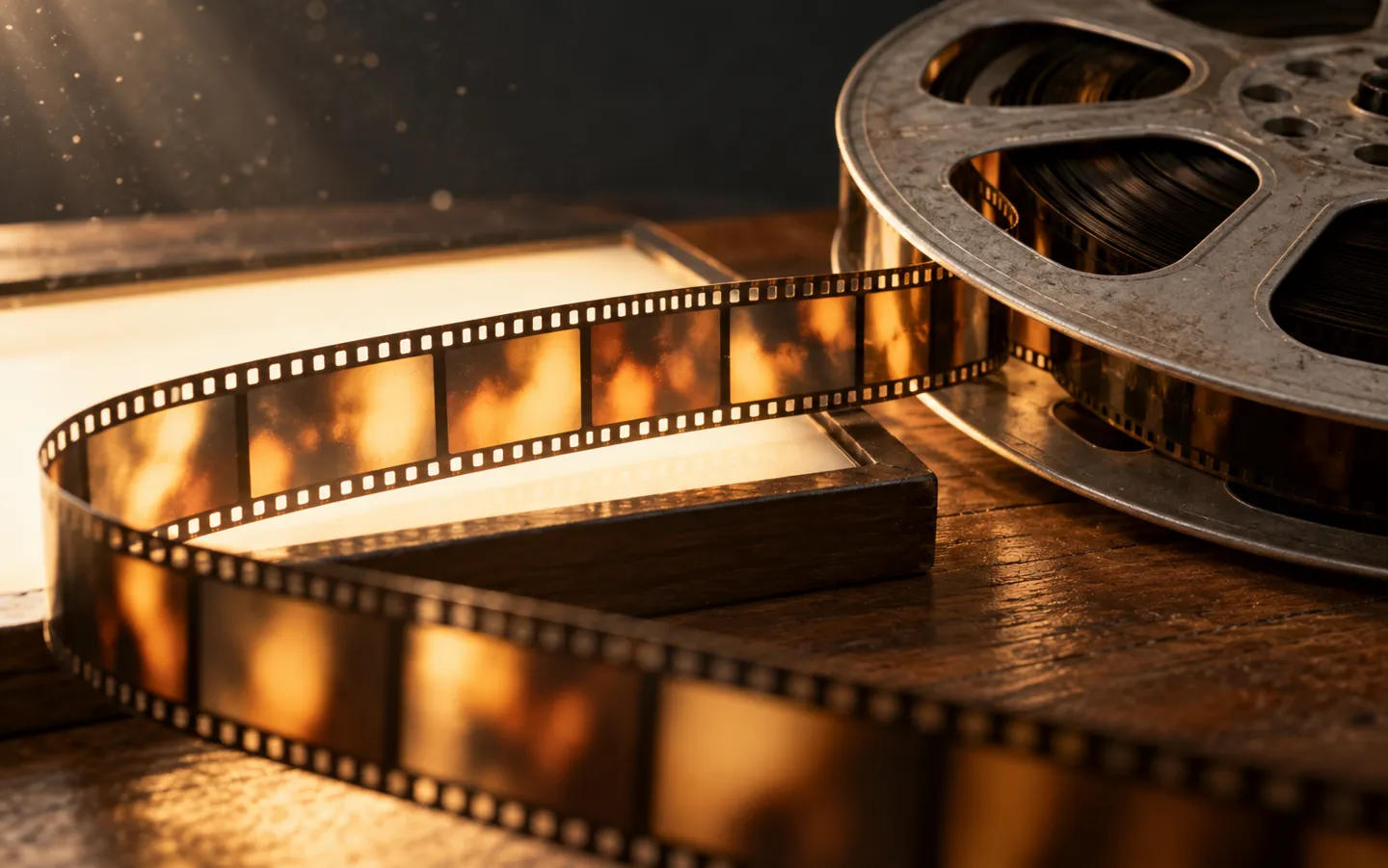
A film is a long strip of still photographs, shown fast enough to move.
Every cinema film made on celluloid is a ribbon of tiny frames, 35 millimetres wide, pulled past a lamp one picture at a time. Here is how the strip, the speed and the reels fit together, and why so much early film has already been lost.
Plain English, with the sources linked.
Count the frames01Principles
02THE SHORT ANSWER
Three ideas explain most of
what happens inside a film reel.
THE STRIP
Cinema film is 35mm wide, with sprocket holes on both edges so the projector can pull it one frame at a time.
Where 35mm came fromTHE SPEED
Most films are still shot at 24 frames per second. The earliest cinema ran at 16; The Hobbit tried 48.
Count the framesTHE SURVIVAL
Only 14% of American silent features survive complete in their original 35mm form.
See the numbers03A QUICK FRAME COUNTER
Pick a frame rate. Standard 35mm cinema film carries 16 frames in every foot, so the faster the rate, the more film races through the gate.
The sums assume standard four-perforation 35mm film. Other formats fit more or fewer frames into a foot.
04TWO NUMBERS WORTH KNOWING
Film runs out quickly in the camera,
and disappears slowly on the shelf.
4 min 26 s
One 400-foot roll of 35mm at 24 fps
That is all the picture a standard 400-foot roll holds. Kodak notes that three-perforation framing uses 25% less film and runs a third longer, which is why some productions choose it.
IN THE CAMERA · KODAK
14% survive complete
American silent features, 1912 to 1929
A study for the Library of Congress found only 14% survive complete in their original 35mm form. Another 11% survive only as foreign versions or on lower-quality formats such as 16mm.
ON THE SHELF · 2013
Put the two together and the problem is clear: a feature film is thousands of feet of fragile material, and for most of cinema's first decades nobody planned to keep it.
05OLD REELS AT HOME
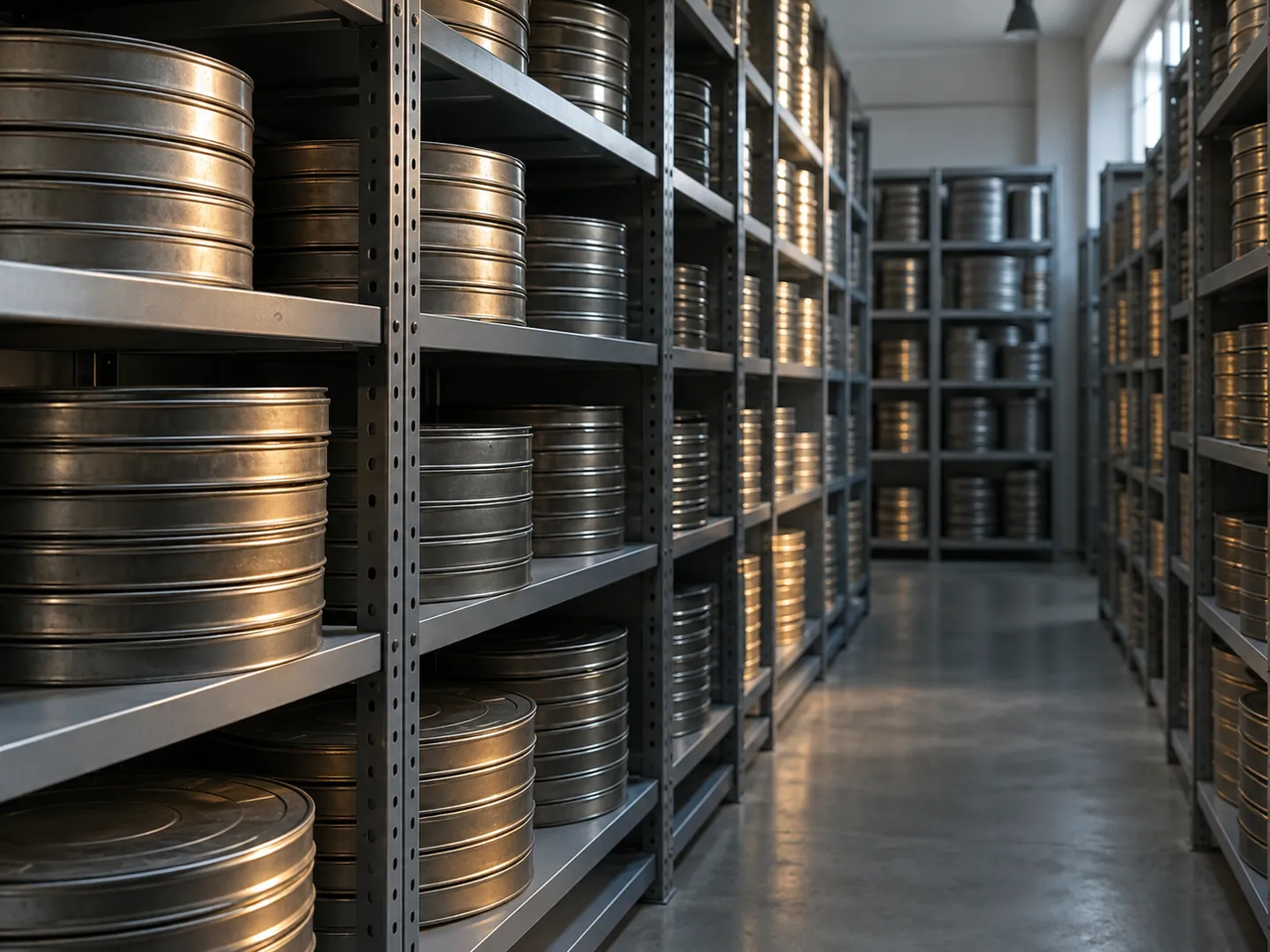
Most (though not all) 35mm film made before 1951 is nitrate, so treat a reel of that age with care until someone has checked it.
Archives slow nitrate decay with cold storage. Badly decayed film kept above about 38°C for more than a week can catch fire by itself.
Nitrate decays in stages, from fading and brown discolouring to softening, blistering and finally powder. Once it blisters it can no longer be copied.
A national or regional film archive can tell you what you have and whether it is worth saving. Some silent films survive only as foreign versions or on 16mm, so an old copy can matter.
06FILM FACTS
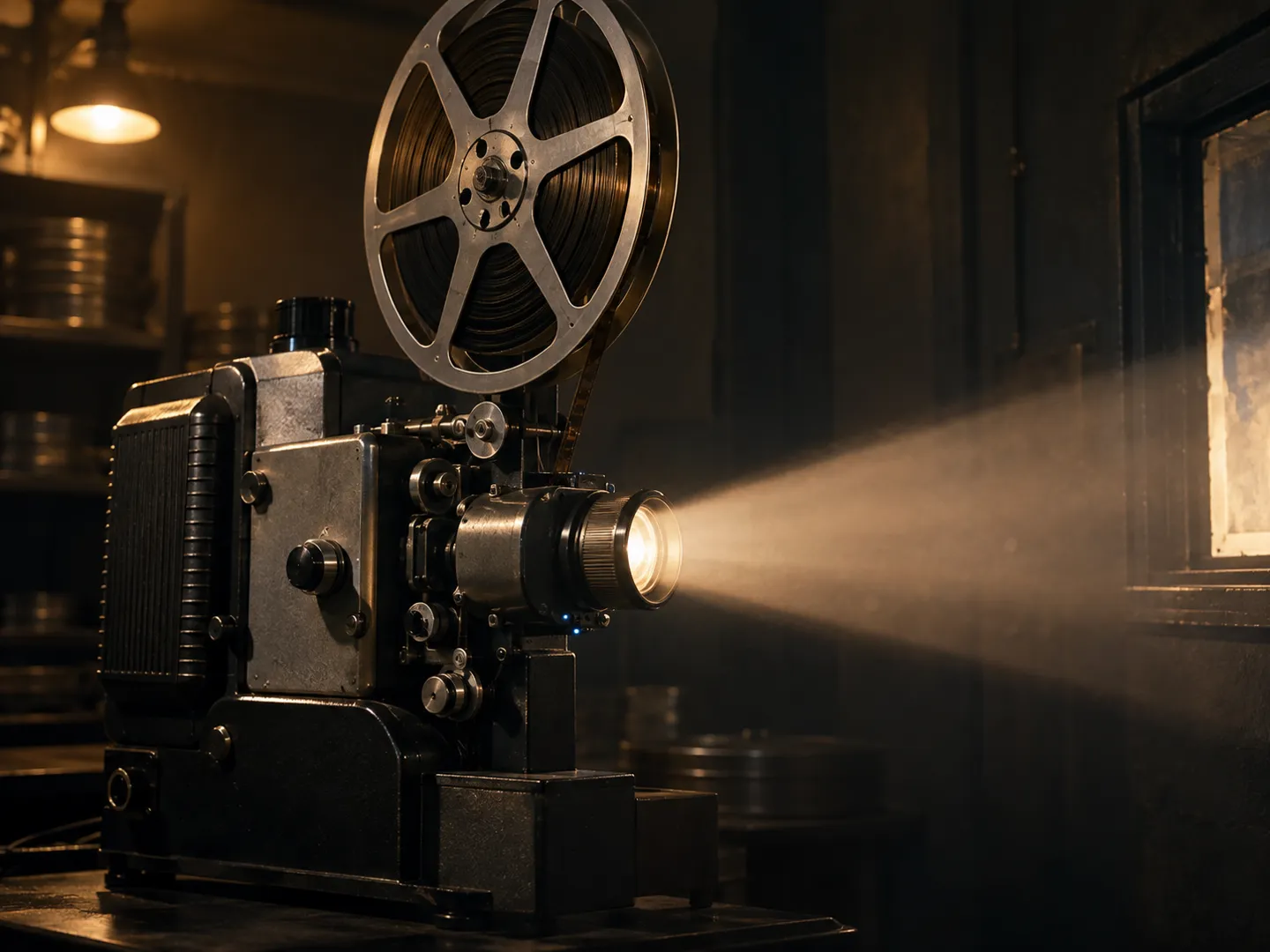
By 1891 William Dickson and his team in Edison’s laboratory had a working Kinetoscope. It did not project at all: one person at a time looked through a peep-hole.
Dickson’s Kinetograph camera used film 35mm wide with a 4 to 3 frame. The perforations started on one edge only and soon ran along both.
On 28 December 1895 the Lumière brothers screened films at the Grand Café in Paris with their Cinématographe, one machine that both filmed and projected at 16 frames per second.
Most films are shot at 24 frames per second. The Hobbit (2012) was the first big Hollywood film shot at 48, and many viewers found the extra sharpness unfamiliar.
Most 35mm film made before 1951 is cellulose nitrate. It is highly flammable, and archivists warn that nitrate fires are virtually impossible to put out once they start.
07QUICK QUESTIONS
Short answers to the questions people ask most.
It is the long-standing cinema standard, and most movies are still filmed at 24 frames per second. Higher rates look smoother: when The Hobbit was shot at 48 frames per second in 2012, early viewers described the footage as ultra-sharp.
It is the width of the film strip. The Kinetograph camera developed by William Dickson in Thomas Edison’s laboratory used 35mm film with pictures in a 4 to 3 shape, and the same width became the standard for cinema.
Standard 35mm film holds 16 frames per foot, so at 24 frames per second about 90 feet pass through the projector every minute. Kodak lists a 400-foot roll as lasting 4 minutes 26 seconds, so a two-hour film runs to roughly 10,800 feet.
The Lumière brothers held their first public screening on 28 December 1895 at the Grand Café on the boulevard des Capucines in Paris. Their Cinématographe was a single device that both filmed and projected, at 16 frames per second.
A 2013 study for the Library of Congress found that only 14% of American feature films made between 1912 and 1929 survive complete in their original 35mm form, and another 11% survive only in foreign versions or lesser formats. Most 35mm film made before 1951 was nitrate, which is highly flammable and decays over time.
08Sources
A NAME WORTH SCREENING
doodlefilm.com is part of the DoodleSale portfolio. It isn't in an auction right now, but you can ask about leasing it.